Enjoy Your New Smile With An EFD Same-Day Crown
November 14, 2019Celebrate Thanksgiving Without Sacrificing Oral Health
November 27, 2019
Cavities are known to develop quickly and silently, which makes them quite difficult to treat. While common dental practices include using X-rays or probing tools to identify cavities, laser cavity detection is an easier and more effective way for finding subsurface cavities that previous tools aren’t been able to accurately locate. Laser cavity detection uses a Diagnodent laser to detect hidden subsurface cavities by examining how the tooth reflects the laser’s light when shown up on it. This preventative tool is completely safe and painless, plus it’s the most accurate form of technology for detecting cavities. Find out how laser cavity detection can help you prevent future cavities with this guide!
What Is Laser Cavity Detection?
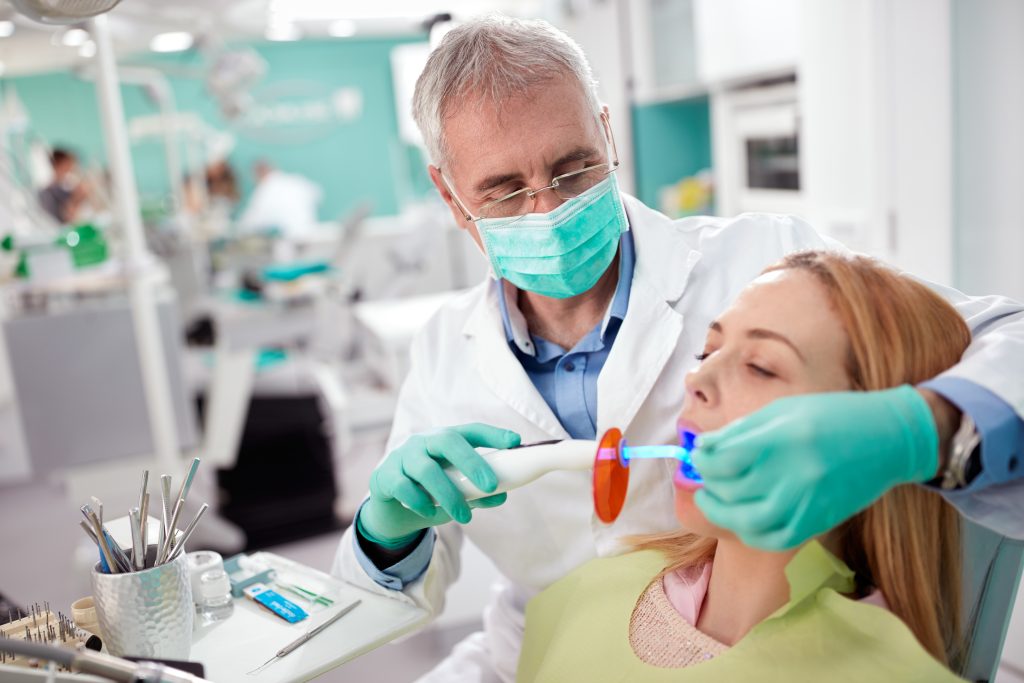
Tooth decay can be difficult to diagnose in certain situations, especially when they are microscopic defects under the enamel. While x-rays and probing tools are effective in detecting decay at the surface of the tooth, they are unreliable when it comes to exposing subsurface cavities. That’s why laser cavity detection is so important in helping detect cavities sooner so less-extensive treatment is needed on a tooth.
Laser cavity detection uses a Diagnodent laser to detect hidden subsurface cavities by examining how the tooth reflects the laser’s light when shown up on it. This Diagnodent laser looks like a pen-like wand when you see it in the office. Even though it appears simple, it can do so much in detecting the smallest cavities inside your tooth.
We use this wand to scan the surface of your teeth, and it can do this scan in just a few seconds. The technology is completely safe and painless. It’s also far more accurate in cavity detection than x-rays and conventional probing instruments. This wand was created using concepts based on lightwave reflection. Science found that laser light can reflect off of certain objects, while other objects will absorb the light.
With dentistry, the laser can expose hidden cavities by the way the tooth reflects the light. When the tooth is healthy, the light will easily pass through with minimal refraction. If a cavity is present, however, light will be reflected. The amount of light that is reflected back can tell us exactly how deep and how large a cavity is, as well as the exact location. This method is much more accurate than any type of x-ray imaging used in dental offices currently.

How Are Cavities Treated?
X-rays are the longest-standing type of imaging using in most dental offices. Most patients experience x-ray dentistry imaging with bitewings, which are x-ray films that patients bite down on with a small mouth device. Techs then place an overhead x-ray machine next to the cheek and in a second the images are taken where the film is touching. Bitewings are used to find surface cavities, especially between the teeth. These can also detect changes in a patient’s bone density for gum disease. Generally, this is how most dental offices detect cavities.
Once a cavity is detected, it needs to be physically removed from the tooth in order to avoid extensive damage and dental infection over time. That will include drilling out a cavity under anesthetic treatment of the area (so a patient doesn’t feel the work). The infection and decay will be removed completely, then the area will be filled with a composite resin made to look like your natural tooth. This composite will last 10 years or so, depending on how well you take care of your teeth.
How Do You Benefit from Laser Cavity Detection?
It’s easier to detect and treat cavities using laser cavity detection. But is it really for you? Not only can we detect cavities with laser light, but problems with the gums and even tooth decay can be fixed with lasers. These lights can cut away damaged tissue pain-lessly and seal an area of treatment without stitches. (Ask us about laser treatment if you are already a fan of laser cavity detection.) Plus, with detection and treatment, you also get these added benefits:
- You can’t even feel laser light when it’s detecting your cavities, plus we do the examination very quickly.
- No uncomfortable bitewings that have to awkwardly go in the mouth for x-ray imaging.
- Increased precision, both in detection and treatment with laser light.
- Faster and more precise diagnosis or cavities and gum health issues.
- You can get a digital model of your mouth immediately after your laser cavity detection scan.

Seeing the Dentist: Why It Really Matters
Tooth decay is the most chronic disease in the United States, even though dental offices are so abundant throughout the 50 states. Studies have found that only 65% of adults are even visiting a dentist each year, and children much less. However, the American Dental Association recommends that every person (including babies and toddlers) visit the dentist at least twice a year for comprehensive exams and dental cleanings. If you fear dental work or have a child that is more apprehensive about dental office, give laser cavity detection and treatment a try! It can completely change the way you feel about dental work and can help you avoid major oral diseases. To have your free consultation or to schedule an appointment, call Family call Family & Cosmetic Dentistry of the Rockies at (970) 267-0993!