Why the Condition of Your Gums Matters for Your Smile
March 23, 2023
Fill the Gap: Explore Your Options to Replace Missing Teeth
April 6, 2023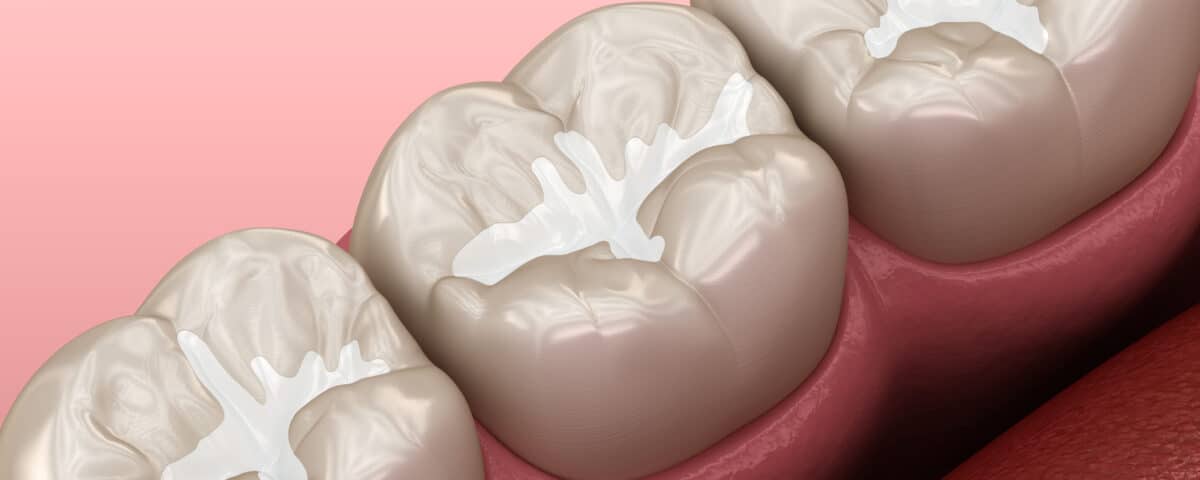
Ever been told by your dentist that you have a high risk of developing cavities? You may want to consider getting a dental sealant. A dental sealant is a thin plastic coating that is applied to the chewing surfaces of teeth where decay often starts. It forms a barrier against plaque and bacteria. It helps to keep food particles from getting trapped in the tiny crevices on the surface of teeth. In this blog post, we will discuss what dental sealants are, and when they should be used!
What is Tooth Decay?
Tooth decay is caused by bacteria that accumulate on the surface of your teeth. This bacteria feeds off of sugars and starches in food. Thus producing an acid that slowly eats away at the enamel of your teeth. Over time, this can lead to cavities or even more serious problems such as infections or tooth loss.
Signs of Cavities
The most common signs of cavities are pain, sensitivity, discoloration, and visible holes in the teeth. Experiencing any of these symptoms? It’s important to schedule an appointment with your dentist so they can treat the issue.
What is a Dental Sealant?
Dental sealants are thin coatings painted on the chewing surfaces of the back teeth. They can prevent cavities (tooth decay) for many years. Sealants protect the chewing surfaces from cavities by covering them with a protective shield that blocks out germs and food. Once applied, sealants protect against 80% of cavities for 2 years and continue to protect against 50% of cavities for up to 4 years.
Who Needs Dental Sealants?
Because of the likelihood of developing decay in the depressions and grooves of the premolars and molars, children and teenagers are candidates for sealants. However, adults without decay or fillings in their molars can also benefit from sealants.
Typically, children should get sealants on their permanent molars and premolars as soon as these teeth come in. In this way, the sealants can protect the teeth through the cavity-prone years of ages 6 to 14.
In some cases, dental sealants may also be appropriate for baby teeth, such as when a child’s baby teeth have deep depressions and grooves. Baby teeth play such an important role in holding the correct spacing for permanent teeth. It’s important that these teeth are healthy so they are not lost too early.
Are Sealants Treatment or Prevention?
Dental sealants are a form of preventive care, which is the best way to protect your teeth against decay and cavities. By applying them as soon as possible, you can ensure that your teeth stay healthy for many years to come. Sealants should be reapplied every few years as necessary. It’s important to maintain regular dental check-ups to ensure your sealants are still doing their job.
Cavity Treatment
If you do develop a cavity, your dentist will review your treatment options. In some cases, sealants can be used as a form of treatment for early cavities.However, in most cases, more extensive treatments such as fillings or crowns may be necessary.
What is a filling?
A filling is a type of restorative dentistry procedure that repairs cavities. During the procedure, your dentist will remove the decayed portion of your tooth and then fill it with either amalgam (silver) or composite resin (tooth-colored). This helps to restore strength and structure to the tooth, as well as protect it from further decay.
What is a root canal?
A root canal is a type of procedure that involves removing the infected pulp inside a tooth in order to save it from further damage. During a root canal, your dentist will remove the damaged pulp and fill the area with either a natural material or an artificial one. This helps to restore strength and structure to the tooth, as well as protect it from further decay. In some cases, a dental crown may be necessary after a root canal to protect the remaining tooth structure. A crown can also help enhance the appearance of your smile if the tooth has damage or decay.
Taking Care of Your Teeth
The best way to take care of your teeth is by brushing twice a day and flossing once a day. Additionally, it’s important to schedule regular dental check-ups so your dentist can examine your teeth for any signs of decay or damage that may require treatment. If you experience any sensitivity, discoloration, or visible holes in your teeth, don’t hesitate to see your dentist as soon as possible. Taking care of your teeth now can help you avoid more serious issues down the road.
Make an Appointment with Glacier Creek Dental
Dental sealants are a great way to protect against cavities and decay, but they aren’t a substitute for proper oral hygiene habits. Regular brushing and flossing, combined with regular dental check-ups, are the best way to ensure your teeth stay healthy and strong.
If you’re interested in learning more about dental sealants or any other dental services, contact Glacier Creek Dental today. Our experienced team of dentists and hygienists would be happy to answer any questions you may have and help you find the best solution for your smile.