How Does a High-Sugar Diet Affect the Teeth?
April 3, 2019The Facts About Charcoal Toothpaste
April 18, 2019
April is National Facial Protection Month and Sports Safety Month. Both of these observances stress the importance of protecting your teeth and gums from injury in sports, exercise and other activities. You can do this through mouthguards and proper protection to fit your activity. However, you also want to protect your teeth through what you’re eating, drinking and how you care for your smile. Here are the top ways to protect your teeth and gums so they stay strong through the years!
National Facial Protection Month
Sports can mean fun, friendships and good memories for your child, teen and even yourself. However, for 3-5 million Americans each year—many of those primarily teens and children—it means dental injuries. The National Youth Sports Foundation for Safety reported that dental injuries are the most common type of orofacial injury sustained during sports participation.
The Journal of the American Dental Association (JADA) reported that 13-39% of all dental injuries are sports-related with the majority of the injuries occurring because mouthguards were NOT being used. When athletes (even young children) don’t wear mouthguards in contact sports, they run the risk of dental injuries. This is especially true if a child has early orthodontics, which have metal brackets and wires attached to the teeth.
An athlete is 60 times more likely to suffer an oral injury when NOT wearing a protective mouthguard. So many people aren’t wearing guards during sports, that there is a recorded 5 million+ cases of knocked-out or broken teeth each year in sports activities. These are major dental emergencies that can lead to the complete loss of a natural tooth or infection. However, using mouthguards—especially ones fitted for the specific player—takes away almost all the risk for dental injury. Many sports players or their guardians don’t know these facts, which is why we emphasize this information every spring.
Injury Prevention for Children and Adults
One of the best ways to protect your smile during sports is with a mouthguard. Many parents don’t get mouthguards for their young children because they believe contact sports aren’t very aggressive with young children. However, many dental injuries don’t come from other children, but from projectiles (like balls) coming in contact with the face. This is because most players will face the soccer ball, basketball or other object being thrown or kicked. When that object goes in the air, it may connect with a face, causing serious dental emergencies.
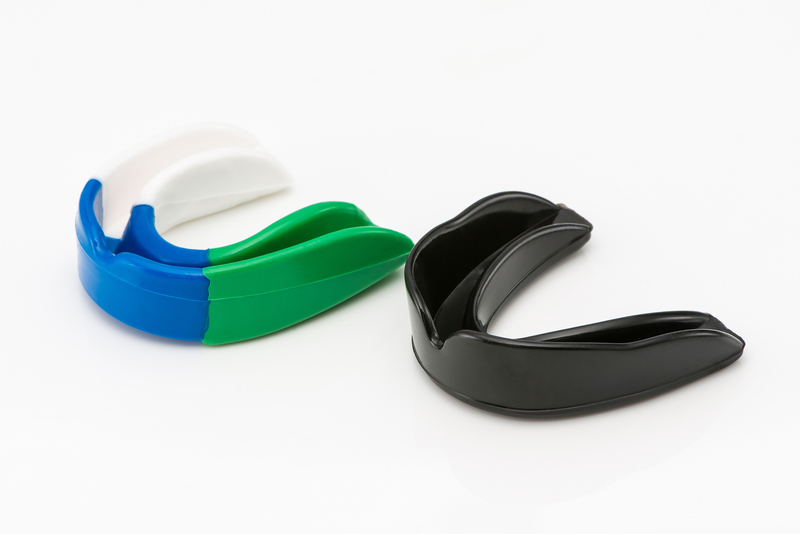
You can prevent dental injuries incredibly easy if you get a mouth guard for your child. There are several different types of mouthguards, and you want to make sure you know what the differences are between them:
- Stock Mouthguards – These are guards that are pre-packaged and ready to wear. You can buy them at many supermarkets. However, they are one-size-fits-all even though every mouth is different. You take a risk on sustaining a mouth injury because of all the wiggle room and space these guards leave you where teeth could be hurt.
- Boil and Bite Mouthguards – A mouthguard should fit snug to your teeth in order to really provide you with the protection you need during sports. A step up from stock guards are boil and bite guards. You can buy these at many sporting goods stores. You build the guard, then place the guard in your mouth where it will then shape around your teeth. The fit is better than stock guards, but not always accurate.
- Custom Guards – Your best option is to invest in a custom mouthguard. We can take impressions of your teeth and provide you options for a mouthguard made just for you. This is the best way to protect your smile without any wiggle room for injury to occur.
Any mouthguard is better than no mouthguard, but custom guards are the best, especially for young children. They are made to fit your child’s mouth so there is no wiggle room for the teeth to still get broken or knocked out (which can happen with non-custom guards).

Additional Ways to Protect Your Teeth
Keep your teeth strong through good food choices each day and follow those with the right oral hygiene practices. Teeth that are strong and free of decay are less likely to fracture, crack or break under pressure. Use these tips for strong teeth:
- Brush your teeth at least twice a day for two minutes at a time, as recommended by the American Dental Association.
- Floss 1-2 times a day, making sure you floss all the teeth, getting up into the gum line.
- Use mouthwash to kill decay-causing bacteria that weakens the teeth.
- Invest in dental sealants to help preventing tooth decay that can damage the teeth.
- Use fluoride products (such as fluoride toothpaste) that can help remineralize and strengthen the teeth.
- Limit your sugar intake. The more sugar you eat, the more decay-causing plaque your mouth creates, and the weaker the teeth become.
- Avoid acidic drinks, if possible. These include any drinks with carbonic acid (like soda and sparkling water) and citric acid (sports drinks, juice, anything preserved). Acids will erode and decay the teeth, causing them to be weak and more easily damaged.
Visiting the Dentist
The ADA recommends visiting the dentist at least twice a year for comprehensive exams and dental cleanings. These visits ensure that the teeth are healthy and strong and that there are no oral health diseases present. You want to go to these so your teeth are strong, especially to avoid injuries in activities such as sports. Do the basics, and then invest in a custom-made mouthguard for your child, teen or for yourself. To schedule your consultation for a mouthguard fitting, call Family & Cosmetic Dentistry of the Rockies today at (970) 267-0993!